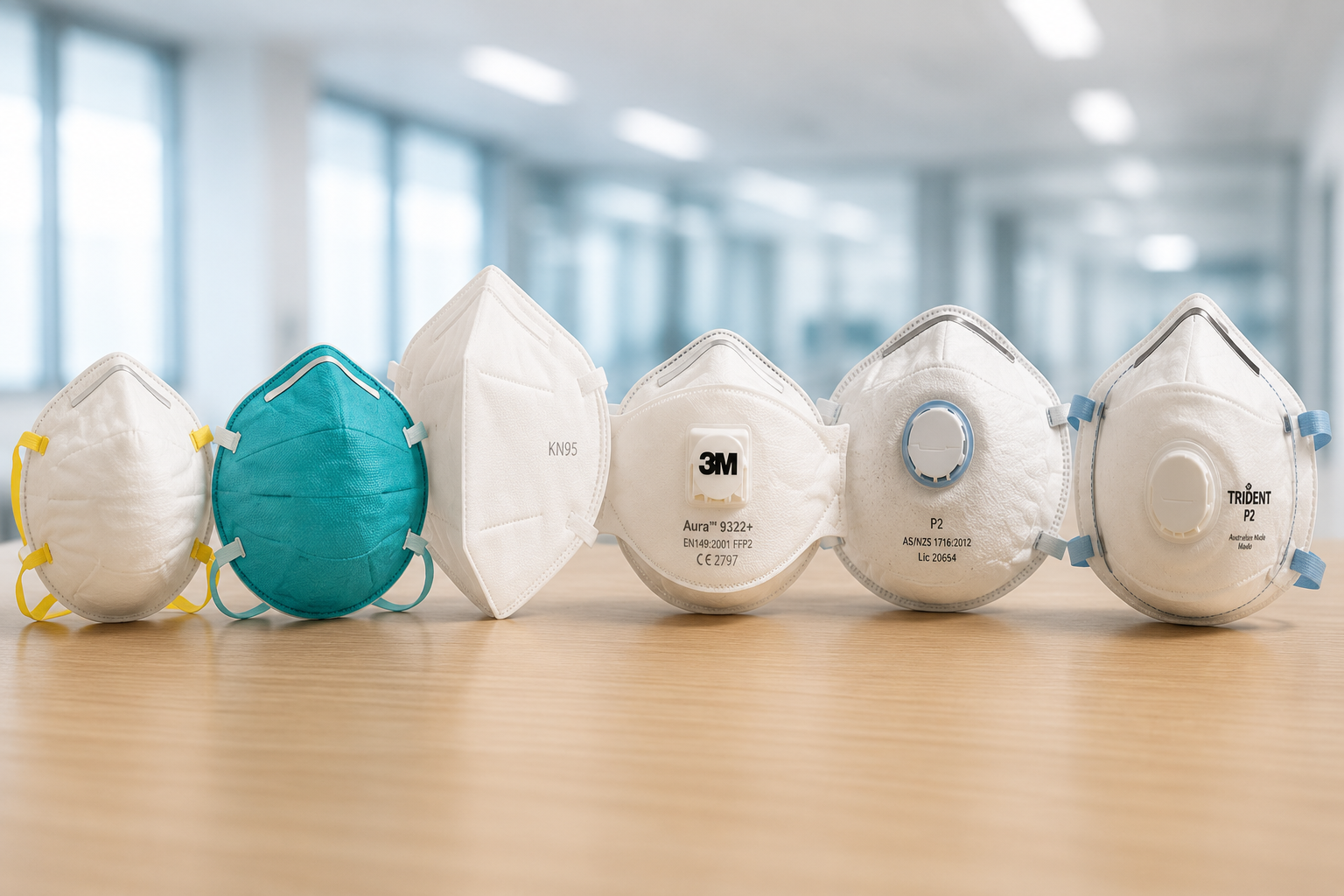
Important: This guide provides general product information only. Where respiratory protective equipment is required for work, it should be selected and used as part of an appropriate workplace risk assessment and respiratory protection program. Follow applicable workplace requirements, manufacturer instructions and professional advice.
Why choosing a respirator is about more than the label
It is easy to start shopping for respiratory protection by looking for a familiar term such as P2 or N95. That is an important part of the comparison, but it is not the whole decision. A respirator also needs to be appropriate for the hazard and task, be the right style and size for the wearer, and — for a tight-fitting respirator — achieve an effective seal against the face.
That last point is particularly important. Two respirators carrying similar filtration classifications can feel and fit very differently. Face shape, nose bridge, chin shape, strap position and the design of the respirator can all influence whether a particular model is suitable for an individual wearer.
If you are simply comparing products for personal use, our mask and respirator range is a useful place to see the different styles available. If the respirator is being selected as workplace RPE, the selection process needs to go further and should follow the requirements applying to your workplace.
Mask or respirator: what is the difference?
The terms “mask” and “respirator” are often used interchangeably in everyday conversation, but they are not necessarily the same thing. A surgical or medical mask is generally designed differently from a tight-fitting particulate respirator. A respirator such as a P2 or N95 is designed to fit closely to the face and reduce the wearer's exposure to relevant airborne contaminants when it is correctly selected, fitted and used.
Safe Work Australia distinguishes surgical masks from P2/N95 respirators and notes that respirators should form a very close seal around the nose and mouth. That is why fit is such a recurring theme whenever respirators are discussed.
Different designs can fit differently
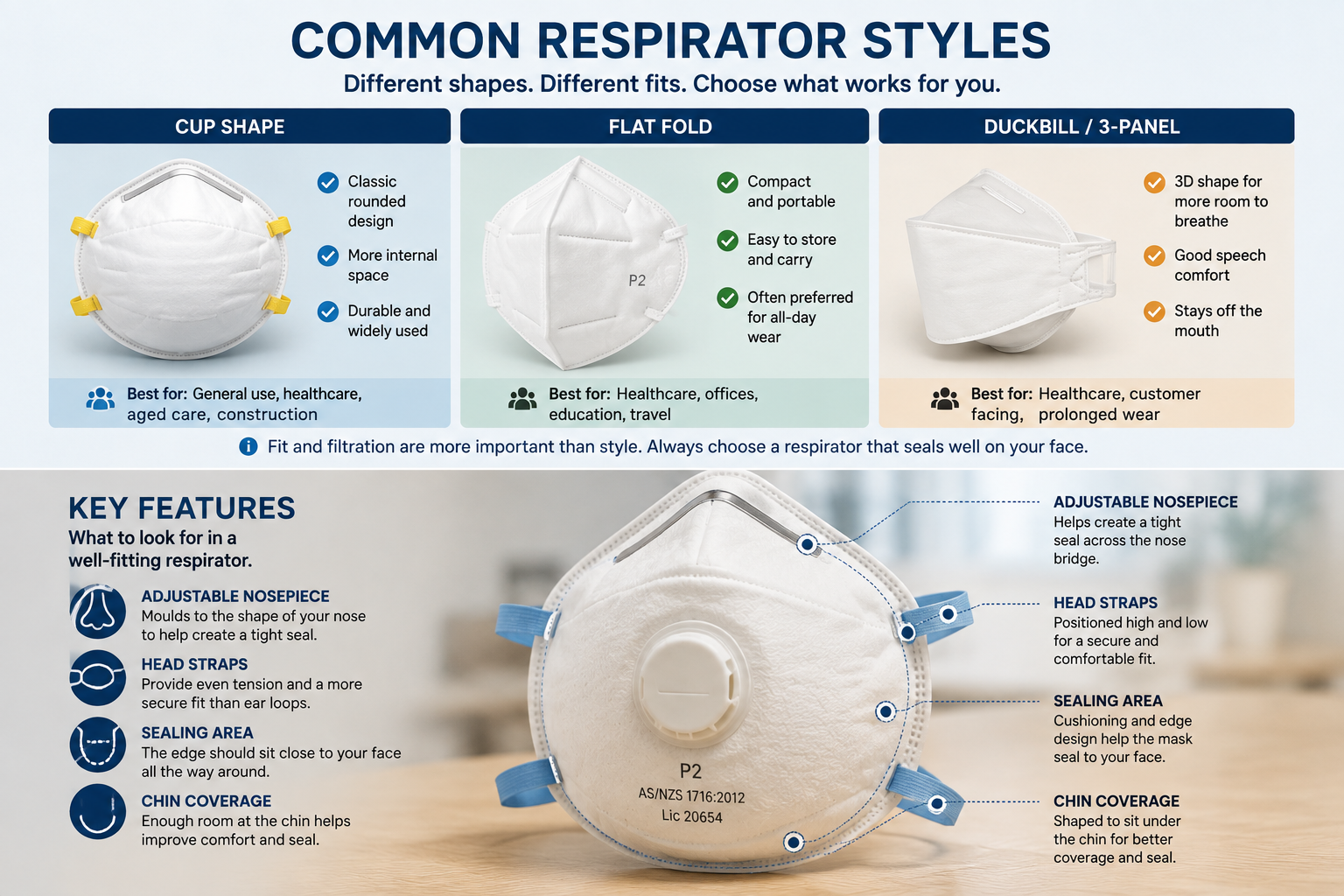
Cup-shaped, flat-fold and multi-panel respirators do not sit on the face in exactly the same way. A design that works very well for one wearer may be uncomfortable or fail to seal adequately on another. This is one reason a workplace fit-testing program may need access to more than one model or size.
P2 and N95: understand what you are comparing
P2 and N95 are terms associated with particulate respirator performance under different standards and regulatory systems. They should not be treated as a guarantee that every respirator bearing one of those classifications will fit every person.
When comparing products, look at the actual manufacturer information and the standard or certification claimed for that particular model. For Australian workplace use, relevant Australian requirements and workplace guidance should be considered rather than relying on a marketplace listing or product title alone.
For medical-grade P2/N95 respirators used in relevant Australian settings, Safe Work Australia notes that applicable Australian/New Zealand standards and/or equivalent international standards may apply and that medical devices can also fall within TGA regulation.
Start with the hazard and intended use
Before choosing any RPE, ask what you are actually trying to protect against. Dust, fibres, mists, fumes, vapours, gases and biological hazards are not automatically controlled by the same type of respirator or filter. A disposable particulate respirator should never be assumed to be suitable simply because it is described as “high filtration”.
For workplace hazards, RPE is also only one part of risk control. WorkSafe Victoria emphasises the hierarchy of control and the need for an appropriate respiratory protection program where RPE is required. The correct respirator therefore depends on the hazard, exposure, task, environment and other controls already in place.
Consider shape, size and facial features
A tight-fitting respirator needs to match the wearer's facial features. WorkSafe Victoria states plainly that one size does not fit all. The nose and chin need to remain inside the intended sealing area, the straps need to hold the respirator in the correct position, and the sealing surface needs to remain in contact with the skin.
Someone with a narrow face may get a very different result from someone with a broad face using the same model. Even where a manufacturer describes a product as “one size”, that does not mean it will necessarily provide an adequate fit for every wearer.
We explore this in much more detail in our guide to understanding mask fit and why size matters.
Headbands, ear loops and the intended product design
Strap configuration is another useful comparison point. Tight-fitting disposable respirators commonly use headbands because the straps help maintain pressure around the sealing surface. Other masks may use ear loops for convenience. The important question is not simply which feels easier to put on, but what the product is designed and certified to do.
Always follow the manufacturer's donning instructions. Strap position, unfolding sequence and moulding of the nose area can materially affect the way a respirator sits on the face.
Fit testing and fit checking are not the same thing
This distinction is worth understanding before buying workplace RPE. A fit test is a formal process used to determine whether a particular make, model, style and size of tight-fitting respirator adequately fits an individual wearer. WorkSafe Victoria describes qualitative and quantitative fit-testing methods and recommends regular re-testing.
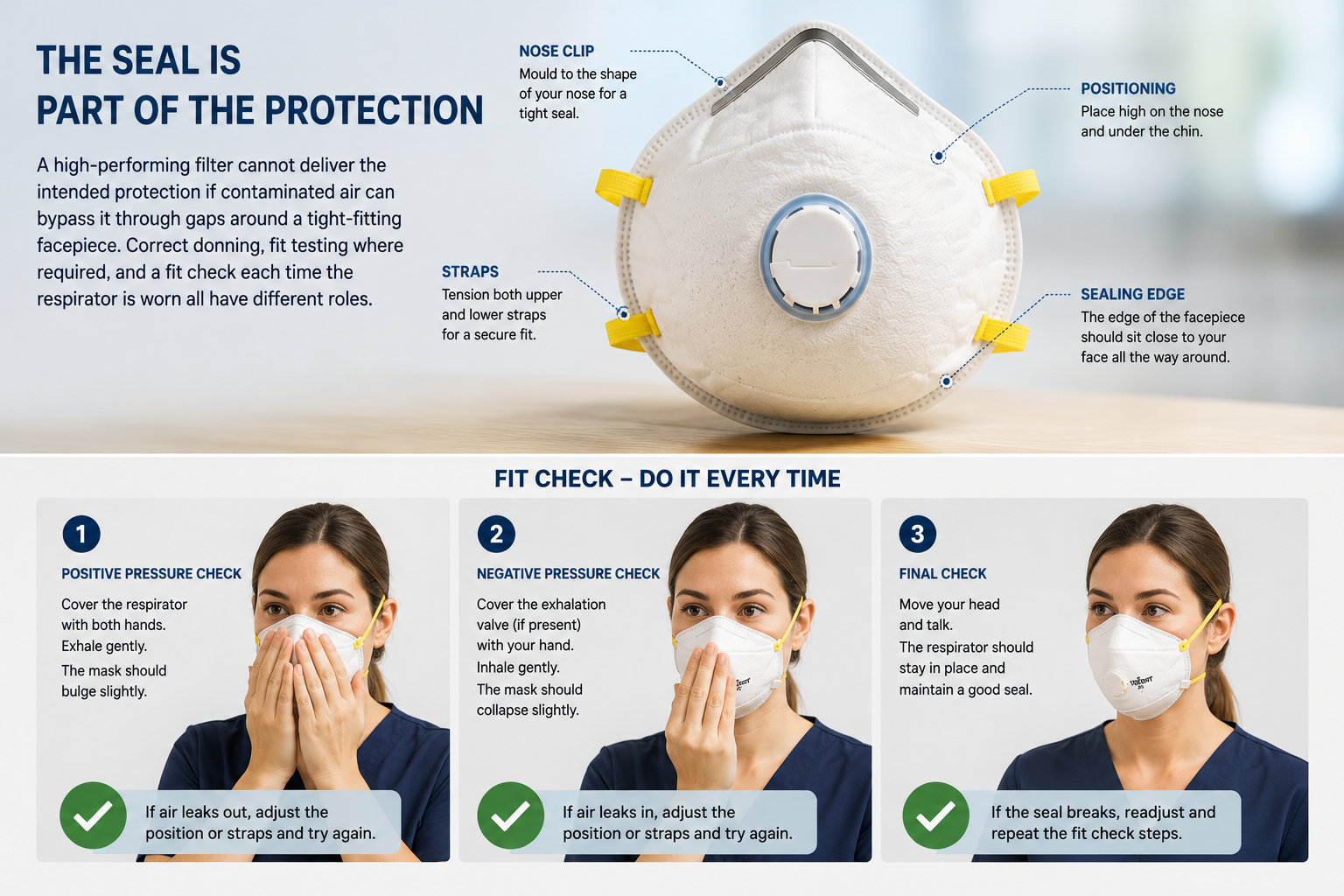
A fit check, sometimes called a user seal check, is performed by the wearer each time a tight-fitting respirator is put on. It helps confirm that the respirator is positioned correctly and that an obvious leak is not present. A fit check does not replace formal fit testing.
The seal is part of the protection
A high-performing filter cannot deliver the intended protection if contaminated air can bypass it through gaps around a tight-fitting facepiece. Correct donning, fit testing where required, and a fit check each time the respirator is worn all have different roles.
Facial hair can interfere with a tight-fitting seal
Facial hair in the sealing area can prevent a tight-fitting respirator from sealing properly. This includes more than a full beard: depending on where the respirator seals, stubble, sideburns or a moustache extending into the sealing surface may also interfere.
Where tight-fitting RPE is required in a workplace, WorkSafe Victoria advises that workers should be clean-shaven in the sealing area. Where shaving is not possible for medical, religious or cultural reasons, an employer should assess the risk and consider alternatives such as suitable loose-fitting powered air-purifying respirator systems that do not rely on the same face seal.
Comfort matters — but it is not a substitute for suitability
If a respirator needs to be worn for an extended period, practical factors such as breathing resistance, heat, moisture, nose pressure, strap tension and compatibility with other PPE can influence whether it is worn correctly and consistently. Comfort therefore matters, but it should be considered after establishing that the RPE is suitable for the hazard and can provide the required fit.
For workplaces, consider the physical demands of the task, duration of wear and environmental conditions. The “best” respirator is not necessarily the most expensive or the one with the most features; it is the one that is appropriate for the hazard and wearer and is used correctly.
Do not overlook communication requirements
In healthcare, education, disability support and other people-facing environments, respiratory protection may also affect communication. Conventional opaque masks hide the mouth and some facial expressions. For certain users and settings, a transparent mask or respirator may be worth considering — provided the chosen product is suitable for the intended protective purpose.
Read our separate guide to transparent masks and clear communication for a closer look at the advantages and limitations.
A practical respirator comparison checklist
- Hazard: What airborne contaminant or exposure are you trying to control?
- Purpose: Is this personal use, healthcare use or mandatory workplace RPE?
- Standard: What standard or certification does the manufacturer claim for the exact model?
- Style: Cup, flat-fold, three-panel or another design?
- Size: Is more than one size available and what does the manufacturer recommend?
- Fit: Can the model achieve an adequate seal on the individual wearer?
- Fit testing: Is formal fit testing required for the workplace or task?
- Facial hair: Is the sealing surface clear of hair?
- Other PPE: Does it work correctly with eyewear, face shields, hearing protection or other equipment?
- Wear time: Is the design practical and comfortable for the expected duration?
- Instructions: Are manufacturer donning, storage and disposal instructions available and understood?
Frequently asked questions
Is an N95 automatically better than a P2?
Not as a simple shopping rule. The terms come from different standards and systems. Suitability depends on the particular product, applicable requirements, intended hazard and — critically for tight-fitting RPE — whether the respirator fits the wearer correctly.
Can I tell whether a respirator fits just because it feels tight?
No. Feeling tight is not the same as demonstrating an adequate seal. Workplace fit testing is specifically intended to determine whether a particular respirator matches the wearer's facial features and seals adequately.
Should I buy several different models?
For an individual consumer, comparing shapes and sizes can be useful if you are unsure what suits you. In a workplace program, access to alternative models and sizes may be necessary because a respirator that fails fit testing for one worker may fit another.
Can I use a disposable P2/N95 for gases or vapours?
Do not assume so. Different airborne hazards require different types of RPE and filters. For workplace exposure, identify the hazard and follow the applicable safety guidance before selecting equipment.
Where to go next
You can browse our current mask and respirator range, read more about respirator fit and sizing, or contact us if you need product information before ordering. For information about delivery and returns, see our Shipping & Returns page.